You’re replacing a system people have used for years.
The best time to call. How the work gets done is still open to change, and the people who do it can tell you where the old one broke.
I work on the software people have to use to do their jobs. I sit with them, find where it breaks, and change what has to change in and around the product so the money comes back.
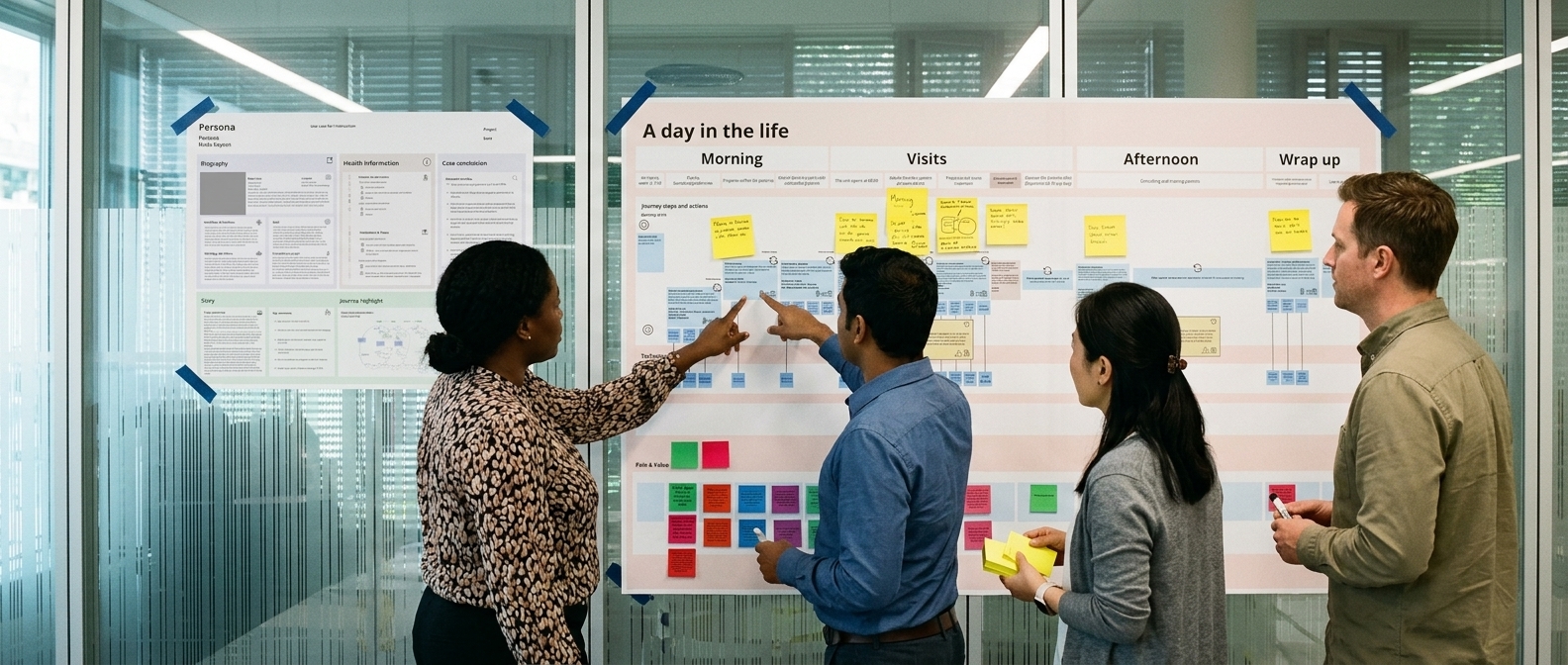
The best time to call. How the work gets done is still open to change, and the people who do it can tell you where the old one broke.
The cheapest time to find out. Nothing exists yet, so nothing has to be undone. What the people it’s for actually need gets answered before the first screen is drawn.
The most common call. Start with the working session. Bring one of your biggest problems and the people who’ll have to live with the answer, and ninety minutes later you have one direction and a straight answer on the money.
Still worth the call. I can help, and I’ll say plainly what can still change and what is now fixed by the budget and the deadline. The earlier you call, the more of the value survives.
Each one leads to the next, and the first counts in full toward the second.
A working session, ninety minutes.
Start with the working session. Bring up to six people and one of your biggest problems, and you leave with one AI idea the whole team agrees on and a straight answer on whether to spend money on it. If you go on within 45 days, it counts in full toward the next step.
AI Opportunity Mapping, half a day to two days.
If it’s worth going further, we map where AI pays, with your leadership team, across the customer journey, the service behind it and the workflows that decide the outcome. You walk out with a written brief that names the place, why, and the rough value and cost.
Build the Proof, four to five weeks, then as needed.
If the brief says build, we prove it first, with a few real people doing their real work on the chosen bet. You walk out with a tested concept, the return case, and a plain go, pivot or stop.
For a bigger question there is a three-month residency as your senior AI experience lead, or a standing advisory seat, for as far as you want to go. I share fees when we talk.
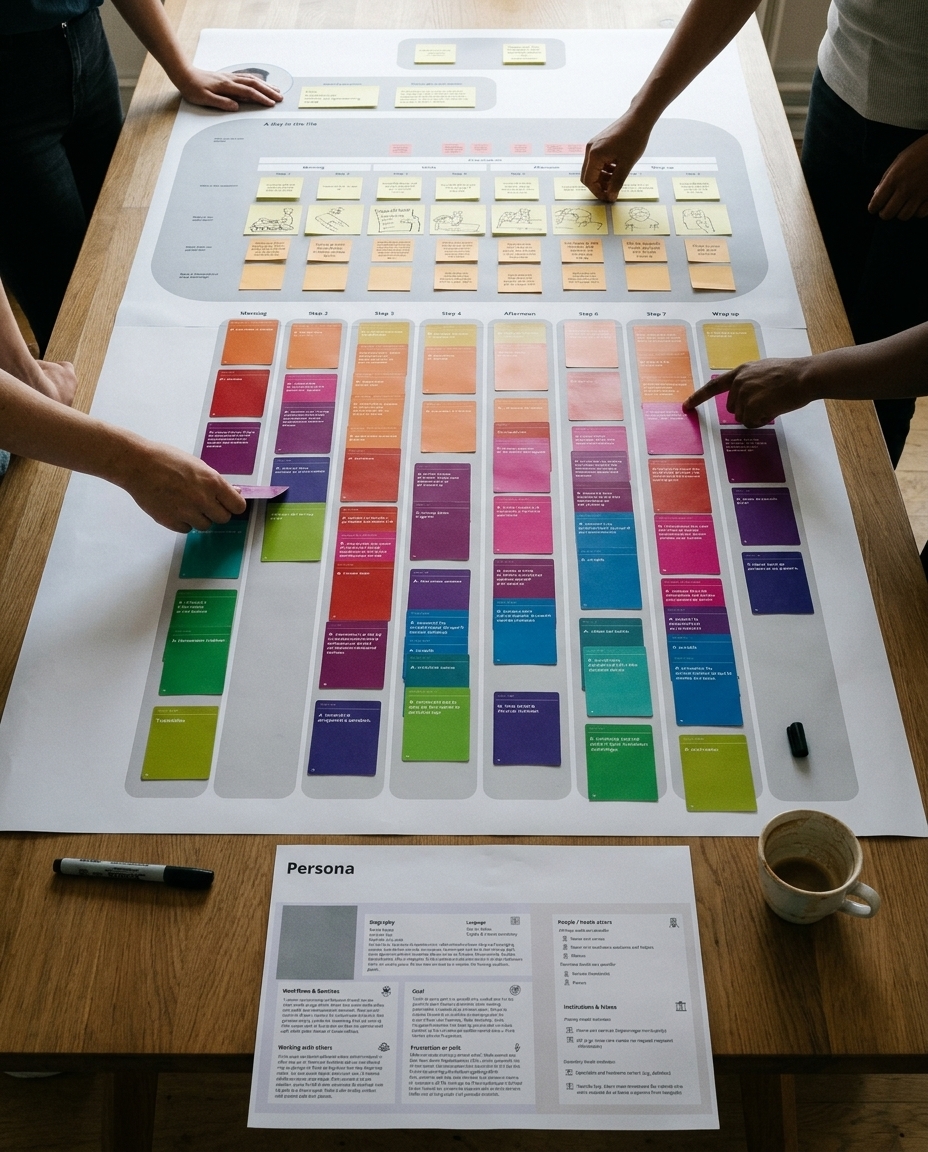
Surveys and dashboards describe the problem and move nothing. So I sit with the people who do the work while they do it, then put what I see next to the numbers your systems already collect. One says what is happening. The other says why.
Before anything is built, a few of those people do their real work with the concept, and we measure what changed. That is the proof, and it comes before the money is spent.
The product is never the whole of it. It sits inside a service, the process before and after it, the handoffs between people and teams, who does what, the training. Change the software without those and the software gets worked around.
I call this way of looking at it Workflow Economics. The return on AI depends on what people do differently once it’s there, so that is what I map, test and measure.
And if the plan is to automate around a problem rather than look at it, I’m not the right person for it, and I’ll say so early.















Email me a sentence about the problem and I’ll come back with dates. Or just tell me what’s on your mind. Either works.
aaron@kennellydesign.co